
You are trying to understand which health coverage rules apply in your specific state, but conflicting information makes it hard to know what your plan must include. This page clears up the confusion between federal mandates and state-specific benchmarks so you know exactly what to look for on your policy.
In short: Essential health benefits (EHBs) are a set of ten service categories that every individual and small-group health plan must cover.
While the categories are federally defined, each state picks a specific benchmark plan that determines the exact details of coverage, such as hospital visit limits and prescription copays.
This means your benefits in New York will differ from those in Alabama even though both cover the same basic categories.
Our pick
Tap to see today's price on Amazon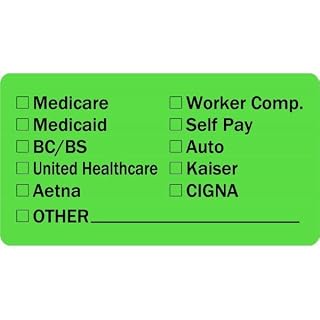
A simple checklist helps you verify which of the ten EHB categories your specific state benchmark plan includes.
What are essential health benefits in plain words
The Affordable Care Act requires all individual and small-group health insurance plans to cover ten specific categories of services. These are the essential health benefits. They ensure that insurance isn’t just a safety net for catastrophic events but supports routine and necessary care. We cover navigating insurance code u65 in a guide of its own.
- Preventive care: Routine checkups, immunizations, and screenings.
- Maternity care: Coverage for prenatal, delivery, and postnatal services.
- Pediatric care: Services for infants and children up to age 19.
- Emergency care: Ambulance services and emergency department treatment.
- Inpatient care: Hospital stays for acute conditions.
- Prescription drugs: Medications prescribed by a doctor.
- Rehabilitative services: Physical therapy and occupational therapy.
- Mental health: Treatment for behavioral and psychological disorders.
- Substance use disorder services: Detoxification and rehabilitation.
These categories are non-negotiable. If a plan is sold in the individual or small-group market, it must include all ten. There are no opt-outs for insurers.
Pro tip: Large employer plans (50 or more employees) do not always have to include all ten categories, though many do. Check your employer's plan documents.
Helps you map the ten federal categories to your specific plan details.
- 2" x 1" Labels
- 500 labels per roll, 1 roll per package
How states set their own coverage rules
Here is the part that confuses most people: the ten categories are federal, but the details are state-set. Each state selects a benchmark plan. This benchmark acts as a baseline that all other plans in that state must match or exceed.
For example, one state might use a benchmark plan with a 4,000-day annual limit on inpatient care, while another might have no limit. One state might cover a generic drug with a low-cost tier, while another sets it in a higher-cost tier. The category is the same; the financial and usage limits differ.
- State picks a benchmark: The state insurance department chooses a specific existing plan or creates a theoretical one.
- Rules are set: Out-of-pocket maximums, provider networks, and service limits are defined based on that benchmark.
- Plans must comply: Any plan sold in that state must cover at least what the benchmark covers.
This system allows states to adapt coverage to their local costs and healthcare environments while keeping the core ACA structure intact.
Safety first: Never assume two states have the same limits just because they cover the same category. Always check the specific state's benchmark plan. We cover womenu2019s Health Center in a guide of its own.
Can essential health benefits vary by state?
Yes, they can and do vary. While every state must cover the same ten categories, the depth of that coverage changes. A plan in California may have a lower out-of-pocket maximum than a plan in a rural state with higher premium prices.
Some states have chosen specific benchmark plans that favor lower costs, which can mean higher copays or deductibles for the consumer. Other states prioritize comprehensive care, resulting in plans with broader networks and more generous prescription limits.
Key variations to look for:
- Out-of-pocket caps: The maximum you pay in a year. Varies by state and family size.
- Provider networks: Some states mandate large networks; others allow smaller, regional ones.
- Drug formulary tiers: The number of drugs covered at each copay level.
Pro tip: If you move states, your health plan usually does not follow you. You must enroll in a new plan that follows the new state's rules.
What is an essential health benefits state list?
Technically, all 50 states and Washington D.C. have essential health benefits standards because the ACA applies nationwide. There is no list of ‘EHB states’ versus ‘non-EHB states.’ Instead, there is a list of states with unique benchmark selections.
States are often grouped by their choice of benchmark. Some follow the federal model plans closely, while others have customized their own. For example, New York and California have historically set their own specific rules that differ from the federal default models.
How to find your state’s list:
- State Insurance Department: They publish the current benchmark plan document.
- Healthcare.gov: If you are on the federal marketplace, it shows plans for your specific state.
- Plan Summary of Benefits: This document compares a specific plan to the state benchmark.
Common myths about state coverage rules
Myth: My state decides which services are covered.
Fact: The federal government decides the ten categories. Your state decides the limits and costs within those categories. We cover fackler men's health in a guide of its own.
Myth: All plans in my state have the same benefits.
Fact: Plans must meet the state’s minimum standard, but they can offer more coverage. Two plans in Texas can have different copays even if they both meet the state requirement.
Myth: I can keep my current plan if I move to a different state.
Fact: Most individual market plans are state-specific. If you move, your plan may terminate or you may need to switch to a plan available in your new state of residence.
When to see a doctor
While navigating insurance is an administrative task, health issues are not. Do not let questions about coverage delay necessary care.
Seek prompt medical attention if you experience any of the following, regardless of your insurance status:
- Chest pain, shortness of breath, or slurred speech (call 911).
- Sudden, severe headache or confusion.
- Unexplained weight loss or persistent fatigue lasting more than two weeks.
- Signs of a mental health crisis, including inability to care for yourself.
Emergency care is one of the ten essential health benefits. You must be treated before billing is determined. Financial concerns should be addressed after your health is stabilized.
The bottom line
The bottom line is that while the ten categories of coverage are federal, the specific costs and limits depend entirely on your state's chosen benchmark plan.
To make smart choices, download the 'Summary of Benefits and Coverage' for any plan you are considering and compare it directly to your current plan. Use a simple checklist to track the ten categories so you do not miss important gaps.
Frequently asked questions
What states are essential health benefits states?
All 50 states and Washington D.C. follow the federal essential health benefits rules. There is no such thing as a state that is ‘not’ an EHB state. Instead, each state chooses a specific benchmark plan that defines the details of coverage for that region. There is more on kids health in a separate guide.
Are essential health benefits decided by the state?
Partially. The federal government lists the ten required categories. The state decides how those categories are applied, including out-of-pocket maximums, provider networks, and prescription drug tiers. The state acts as the regulator of the details.
Can essential health benefits vary by state?
Yes. Because each state picks a different benchmark plan, the specific benefits will vary. A plan in one state might have a low-cost drug tier, while the same type of plan in another state might charge for a higher-cost tier. Always check your local state’s specific rules.
How do essential health benefits vary by state?
Variation happens through benchmark selection. One state might choose a low-cost benchmark that limits inpatient days, while another might choose a comprehensive benchmark with higher provider quality requirements. These choices trickle down to every plan sold in that state.