
You spend hours typing, looking down at your phone, or sitting in a chair, and your neck or lower back often hurts by evening. This page explains exactly why that alignment matters and gives you safe ways to fix it.
In short: Posture is how your body is positioned when you stand, sit, or move. Good posture reduces strain on your muscles and joints, helps you breathe fully, and supports better focus and confidence. The evidence linking chronic poor posture to pain is strong, but simple daily habits can make a real difference.
Quick picks
Our shortlist for this job · tap one to see today's price
Supports your lower back while sitting so you do not slouch during long work sessions.
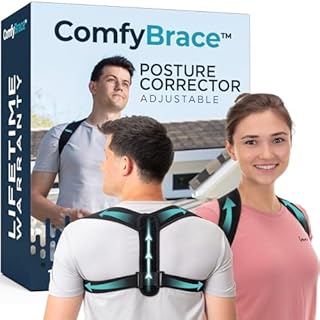
Acts as a sensory cue to help you become aware of slouching during daily tasks.
What Good Posture Actually Means in Plain Words
Good posture is not about standing like a soldier or forcing your shoulders back. Before you buy anything, it is worth looking at understanding blood sugar during intimacy.
It is about keeping your spine in a natural curve so your muscles do not have to work hard to hold you up.
When your body is aligned, gravity helps you instead of fighting you. This creates an efficient system where minimal muscle effort is needed to maintain stability.
Think of it as a stack of blocks. If the bottom block is shifted forward, the top ones wobble. If it is centered, the whole stack is stable. Your spine works the same way.
- Neutral spine: Your ears, shoulders, hips, and ankles line up vertically when standing.
- Open chest: Your ribs lift slightly so your lungs can expand fully without restriction.
- Relaxed neck: Your head sits balanced over your shoulders, not jutting forward toward the screen.
Pro tip: Do not aim for perfect stiffness. Aim for a comfortable, neutral position that you can hold without pain.
How Poor Posture Affects Your Body and Mood
When you slouch, your back muscles pull tight to hold your upper body up.
This constant tension leads to aching in your neck, shoulders, and lower back. Over time, these muscles become shortened and tight, making it harder to sit up straight without effort. The other half of this decision is how posture affects daily comfort.
Poor posture also restricts your diaphragm, the muscle at the bottom of your lungs. When your chest collapses forward, your lungs cannot expand fully. This forces you to take shallow breaths, which can make you feel more fatigued and less focused throughout the day.
There is also a link between posture and mood. Studies suggest that opening your chest and standing tall can slightly boost feelings of confidence and reduce stress hormones. While the effect is modest, it adds up over time.
Safety first: If you have sharp pain, numbness, or weakness in your arms or legs, stop and see a doctor immediately. Do not ignore these signs.
Why Posture Matters When You Are Typing or Sitting
Most people sit for eight or more hours a day at a desk. This is the single biggest driver of postural issues for many adults.
When you lean forward to type, your neck tilts forward. For every inch your head moves forward, the effective weight of your head on your neck increases by ten pounds. This puts significant pressure on your cervical spine and the muscles in the back of your neck.
Raising your screen to eye level keeps your neck in a neutral position. Your feet should rest flat on the floor, and your elbows should stay close to your body at about 90 degrees. The other half of this decision is how good is my posture.
If your chair does not support your lower back, you are likely to round forward. This flattens your natural lumbar curve and strains your discs. A simple support can help maintain that curve.
A lumbar support pillow helps your office chair maintain your lower back curve, reducing the urge to slouch.
- For convenience and durability, we upgraded and lengthened the straps to fit more
- 𝐔𝐏𝐆𝐑𝐀𝐃𝐄 & 𝐔𝐍𝐈𝐐𝐔𝐄 𝐁𝐀𝐂𝐊 𝐒𝐔𝐏𝐏𝐎𝐑𝐓 𝐏𝐈𝐋𝐋𝐎𝐖: If you spend a lot of time sitting on office
The Role of Posture in Singing, Dancing, and Communication
Posture is not just about pain; it is also about performance and how you interact with others.
In singing, an open posture allows your diaphragm to move freely. This helps you support your breath and project your voice without straining your throat. Slumping hinders your breath control and limits your vocal range.
In dance, good alignment helps you move with less effort. It reduces the risk of injury to your joints by ensuring forces are distributed evenly. Dancers often notice that better posture leads to greater endurance on stage.
In communication, how you hold yourself changes how others perceive you. Standing tall with an open chest signals engagement and confidence to your listeners. You do not need to be rigid; just being upright and open makes you more approachable.
Pro tip: If you sing or dance, practice in front of a mirror to check that your ribs are lifted and your chin is level. For the detail, see our notes on antibiotic glucose impact.
Common Myths About Posture and the Facts
Many people believe that posture is fixed once you reach a certain age. That is false. Your body can adapt to better positions at any age, and muscle strength can be built at 30, 50, or 70.
Another common myth is that you need to stand perfectly still all day. In reality, movement is better than stillness. Constantly holding a static ‘perfect’ position can actually cause muscle fatigue. The goal is to move gently and change positions often.
Finally, some think that a posture corrector is the entire solution. A brace is a tool to remind you of the position, but it does not build the strength needed to hold that position on its own.
| Myth | Fact |
|---|---|
| Slouching means you are lazy | Slouching is usually a comfort response to fatigue or weak support |
| Posture correctors fix the problem alone | Braces are reminders, not solutions; exercises are needed |
| Perfect posture means standing at attention | Good posture is a dynamic, balanced state that changes with activity |
A posture corrector can remind you to roll your shoulders back while you build stronger muscles.
- Say Hello to a Pain-Free Life- The Comfy Brace posture corrector aims to relieve
- Innovative Design - Our proprietary design is orthopedically created to correct your
Simple Steps to Improve Your Posture Today
You do not need to go to the gym to start fixing your posture. Small, consistent changes are more effective than occasional intense workouts.
Begin by checking your screen height. The top of your monitor should be at or slightly below eye level. Use books to raise it if needed. This simple adjustment can immediately reduce neck strain.
Set a timer to stand up and move for one minute every hour. This breaks up long sitting sessions and prevents your muscles from tightening up. For the detail, see our notes on diabetes signs and symptoms.
Try the Chin Tuck exercise: sit tall, gently pull your chin back as if making a double chin, and hold for five seconds. Repeat ten times. This strengthens the deep neck muscles that keep your head balanced.
If you use a phone, lift it to eye level instead of bending your neck down. This significantly reduces the load on your spine during those short breaks.
When to See a Doctor for Posture Issues
Most posture aches are managed with self-care and time. However, you should seek medical advice if you have warning signs that suggest nerve involvement or a structural issue.
Posture problems are rarely the whole story when pain is severe. Sometimes, underlying conditions like herniated discs or arthritis contribute to the symptoms. A doctor can help identify these causes.
- Pain that shoots down your arm or leg.
- Numbness, tingling, or weakness in your hands or feet.
- Loss of bladder or bowel control.
- Back pain that does not improve after two weeks of rest and activity.
Do not use posture correctors to mask these symptoms. Get a professional evaluation to find the root cause. Early intervention is key to preventing long-term damage.
The bottom line
Posture is a trainable habit, not a permanent flaw. Start by improving your sitting setup and adding simple movement breaks to your day. The next step is to check your screen height and try the chin tuck exercise tonight. For most office workers, a lumbar support pillow is the most practical immediate fix to maintain that healthy curve. For the detail, see our notes on aqua core lumbar moves.
- For convenience and durability, we upgraded and lengthened the straps to fit more
- 𝐔𝐏𝐆𝐑𝐀𝐃𝐄 & 𝐔𝐍𝐈𝐐𝐔𝐄 𝐁𝐀𝐂𝐊 𝐒𝐔𝐏𝐏𝐎𝐑𝐓 𝐏𝐈𝐋𝐋𝐎𝐖: If you spend a lot of time sitting on office
Frequently asked questions
How long should I wear a posture corrector?
Start with short intervals, such as 15 minutes a day, to get used to the position. Do not wear it for hours at a time. The brace is a cue to move, not a device that holds you up permanently. Check your product manual for specific guidance on duration.
Can posture correctors make my muscles weak?
Yes, if you rely on them too much without doing exercises. Posture correctors can limit the range of motion of your shoulder blades and upper back muscles. Use them as a reminder while you actively practice proper alignment and strengthen those muscles.
Why does my neck hurt when I type?
Your head weighs about ten pounds. When you lean forward to type, the leverage multiplies that weight, straining the muscles in the back of your neck. Move your keyboard closer and raise your monitor to keep your head over your shoulders.