
You spend hours sitting at a desk, and your shoulders have started to round forward while your lower back aches by the end of the day. This page gives you a clear, evidence-based exercise routine to gently reverse hunching and forward head posture without complex equipment.
In short: This routine suits adults with mild to moderate postural strain from sedentary work. Perform the full sequence five times a week, holding each static exercise for 30 seconds or doing 10-15 reps of the dynamic movements, and expect to feel a difference in shoulder and neck tension within two weeks of consistent practice.
Quick picks
Our shortlist for this job · tap one to see today's price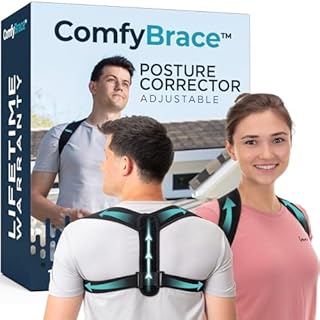
A posture corrector helps you feel where 'good' posture is so you can practice the exercises with better awareness.

A foam roller helps you stretch tight back and hip muscles, making the posture exercises easier and more effective.
Before you start: Check your body and set up the space
You need a small, clear area to move through. A yoga mat or non-slip rug is helpful for the floor exercises, but a hardwood or tile floor works fine if you stay off your bare feet initially. We cover defining personal fitness in a guide of its own.
The evidence for exercise-based posture correction is moderate. Studies from physical therapy and occupational health fields suggest that combining aerobic activity with targeted strengthening and stretching improves spinal alignment and reduces pain better than exercise alone.
However, exercises cannot change bony spinal curves. They improve the muscles that support your spine, which reduces strain and makes you stand taller. Do not expect a permanent structural change; think of this as building stronger support for your current frame.
Safety first: If you have a diagnosed spinal condition like severe scoliosis or a disc herniation, get specific exercises from a physical therapist. This general routine is for healthy adults with posture-related aches.
Five warning signs that mean you should stop and see a doctor
Posture exercises are low risk, but they can aggravate existing issues. Stop immediately if you feel sharp, shooting pain, or pain that travels down your arm or leg. This could be a nerve issue, not a muscle one.
Also pause and seek medical advice if you experience new numbness, tingling, or weakness in your hands or feet. These are neurological symptoms that require a proper diagnosis.
Do not push through joint pain. If an exercise causes pain in your joints (shoulder, knee, hip) rather than a stretch in your muscles, the movement pattern is likely wrong. Stop and reassess the form. We go through safe daily routine for better stance step by step in its own article.

- Our yoga set equipment for workout, stretch, and relaxation. Yoga kit ensures you have
- The upgraded yoga mat for home workout is made of premium TPE material, more durable
Warm-up: Get the spine and shoulders ready
Start with two minutes of gentle walking in place or arm circles to increase blood flow. This lowers the risk of pulling a cold muscle.
Then, spend two minutes on a standing cat-cow. Place your hands on your hip crests. Inhale and gently arch your back, looking up. Exhale and round your spine, tucking your chin. Move slowly with your breath.
Finish with 10 scapular (shoulder blade) squeezes. Stand tall, pull your shoulder blades down and together like you are squeezing a pencil between them. Hold for two seconds. This activates the upper back muscles that fight hunching.
Exercise 1: Wall Angels for scapular control
This is the single most effective exercise for forward shoulder posture. It retrains your shoulder blades to move properly against your ribcage.
- Start: Stand with your back flat against a wall. Your heels, glutes, upper back, and head should touch the wall. Keep a small gap between your lower back and the wall.
- Move: Start with your arms bent at 90 degrees, like a ‘W’. Press your elbows and forearms into the wall.
- Slide: Slide your arms up to a ‘Y’ shape, keeping everything touching the wall. Slide back down.
Form cue: Do not let your ribs flare out or your lower back arch away from the wall. The whole back must remain in contact. Aim for 2 sets of 10 reps.
A posture corrector you use for 10 minutes a day reminds your brain what 'neutral' alignment feels like, making it easier to master this wall exercise.
- Say Hello to a Pain-Free Life- The Comfy Brace posture corrector aims to relieve
- Innovative Design - Our proprietary design is orthopedically created to correct your
Exercise 2: Chin Tucks for forward head posture
Forward head posture puts massive strain on your neck muscles. Chin tucks gently stretch the back of the neck and strengthen the deep neck flexors. For the detail, see our notes on strengthen the muscles behind your neck.
- Start: Sit or stand with good posture, looking straight ahead.
- Move: Pull your chin straight back, as if making a ‘double chin’. Do not tilt your head up or down.
- Hold: Hold the stretch for 3-5 seconds, then release.
Form cue: Imagine a string pulling the top of your head upward while you tuck. The movement should be small. Aim for 2 sets of 15 reps.
Exercise 3: The Doorway Pec Stretch
Tight chest muscles are the main culprit behind hunched shoulders. If you sit all day, your pecs shorten and pull your shoulders forward. This stretch lengthens them.
- Start: Stand in a doorway. Place your forearms on the door frame, elbow at shoulder height.
- Move: Step one foot forward and gently lean through the doorway.
- Hold: Feel a deep stretch in the front of your shoulder and chest. Hold for 30 seconds.
Form cue: Keep your shoulder blades down, not raised toward your ears. Do not push until it hurts; a strong stretch is enough. Aim for 2 sets per side.
Exercise 4: Foam Rolling for back tension
Before or after your posture routine, rolling out your back and hips can release the knots that hold you in a hunched position. This is where a high-density foam roller becomes a useful tool.
- Place: Lie on your back with the foam roller under your mid-to-upper back. Support your head on the floor.
- Roll: Gently roll from your shoulder blades down to your lower back. Do not roll on the spine itself; keep the roller on the muscles on either side.
Form cue: Move slowly. If you feel a sharp, localized pain, stop. Aim for 1-2 minutes of rolling per session.
Exercise 5: Pelvic Tilts to fix lower back curve
Many hunchers also over-arch their lower back when standing. Pelvic tilts teach you to flatten that curve. It helps to understand mens optimum health before going further.
- Start: Lie on your back with your knees bent and feet flat on the floor.
- Move: Press your lower back into the floor by tightening your glutes and abs. Exhale.
- Release: Let your back arch slightly away from the floor on your inhale. Repeat.
Form cue: This is a small, controlled movement. You are moving your pelvis, not your whole back. Aim for 2 sets of 15 reps.
Your quick reference: The 7-Day Posture Fix Table
Use this table to keep track of your progress. Consistency is more important than intensity. The goal is to do these movements most days of the week.
| Exercise | Set / Time | What it helps | Easier version |
|---|---|---|---|
| Wall Angels | 2 x 10 | Shoulder hunching | Use a lighter wall or do it seated |
| Chin Tucks | 2 x 15 | Forward head / neck strain | Do smaller, slower reps |
| Pec Stretch | 2 x 30s | Tight chest muscles | Stand only on one leg |
| Foam Rolling | 1-2 mins | Releases muscle knots | Use a massage ball instead |
| Pelvic Tilts | 2 x 15 | Lower back over-arching | Do it while sitting |
Do the full sequence 4-5 times a week. On busy days, just do the Chin Tucks and a quick Pec Stretch for 2 minutes. Better than nothing.
How to progress safely: Build the habit
Do not rush into advanced movements. Your posture habits are built in your brain, not just your muscles. It takes 4-6 weeks for your body to start ‘defaulting’ to a better position.
After two weeks, if the Wall Angels feel too easy, try adding a light resistance band across your upper back. Perform the sliding motion against the band’s tension. This makes the muscles work harder to hold the new shape.
Add a second daily check-in: stand up, check your alignment, and do 5 chin tucks. This ‘micro-movement’ habit is often more effective for maintaining posture than the long evening routine. The other half of this decision is attractive scents for men.
Pro tip: Set a phone alarm for every hour. When it goes off, stand up for 30 seconds, do a chin tuck, and sit back down. This breaks the 'slump' that builds up over the day.
When to stop and see a professional
If your back pain has lasted more than two weeks without improvement, it is time to see a doctor or a physical therapist. Exercise is a tool, but it is not a substitute for a diagnosis.
See a specialist promptly if you have lost bladder or bowel control, or if you have severe numbness in the ‘saddle area’ (groin/buttocks). This is a medical emergency known as Cauda Equina Syndrome.
If you have a history of fractures, osteoporosis, or are on blood thinners, talk to your doctor before doing any new exercise, including stretching or foam rolling, to ensure you are safe to do so.
Safety first: Trust your pain. Mild muscle soreness is okay. Sharp, joint, or shooting pain is not. When in doubt, stop the movement and consult a healthcare provider.
The bottom line
The bottom line: Consistency beats intensity. Do the 5-exercise routine 4-5 times a week and you will likely feel less neck tension within two weeks. The one tool most people need is a posture corrector, which acts as a physical reminder of good form while your muscles learn the new pattern. Start today. Loaders in this spot often ask about which perfume last as well.
- Say Hello to a Pain-Free Life- The Comfy Brace posture corrector aims to relieve
- Innovative Design - Our proprietary design is orthopedically created to correct your
Frequently asked questions
How long does it take to fix posture with exercises?
You will likely feel less muscle tension and stand a bit taller within 2-3 weeks of daily practice. However, changing your deep-seated muscle habits and structural alignment takes 2-3 months of consistent work. Think of it like learning a new skill, not a quick fix.
Can I just wear a posture brace instead of exercising?
No. A brace is a reminder, not a trainer. Relying on a brace all day can actually weaken your back and core muscles. Use a brace for 10-15 minutes a day to feel correct alignment, then use the exercises to build the strength to maintain that position without the brace.
Is it okay to do these exercises if I have lower back pain?
It depends on the type of pain. If it is general stiffness or ‘giving out’ pain, the pelvic tilts and stretching are usually helpful. If it is sharp, shooting pain, or pain caused by an injury, you need to get a doctor’s clearance before starting. Never push through pain.