
Cold outdoor air and dry indoor heating work together to strip the moisture from your skin, leaving it tight, flaky, and itchy. This guide helps you find a moisturizer that actually repairs that barrier, so you can stay comfortable through the coldest months.
In short: For most people, **CeraVe Moisturizing Cream** is the best option because it restores the skin’s natural barrier with three essential ceramides. If your skin is extremely dry or itchy, a urea-based cream like **Eucerin Advanced Repair** may be more effective. For very sensitive or eczema-prone skin, look for minimal-ingredient formulas like **Vanicream**.
Quick picks
Our shortlist for this job · tap one to see today's price
Restores the skin’s protective layer with three essential ceramides and hyaluronic acid.

Targets rough, chapped areas with a rich formula that locks in moisture for 24 hours.

Soothes itching and redness with a gentle, fragrance-free balm suitable for delicate areas.

Absorbs quickly without a greasy feel, making it ideal for layering under clothes during the day.
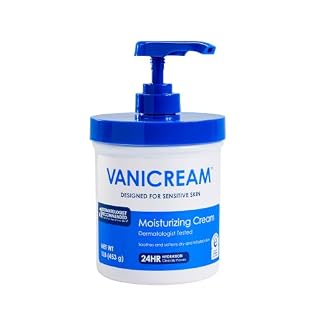
A minimal, hypoallergenic formula with no dyes, fragrances, or common irritants.
Best for Overall Barrier Repair: CeraVe Moisturizing Cream
Winter air is often less than 10% humidity, which causes your skin to lose moisture faster than it can replenish it. CeraVe Moisturizing Cream is a top choice because it is formulated with three essential ceramides: 1, 3, and 6-II. It helps to understand how often people apply moisturizer before going further.
These ceramides act as the mortar between your skin cells. When they are depleted, the barrier becomes leaky and sensitive. This cream helps restore that integrity.
The formula also includes hyaluronic acid. This ingredient attracts water to the skin, keeping it plump. The texture is a thick, white cream that sits on the surface longer than a standard lotion.
- Best for: General winter dryness, flakiness, and roughness
- Key ingredients: 3 Essential Ceramides, Hyaluronic Acid, MVE technology
- Texture: Thick cream, non-greasy once absorbed
Tip: Apply this cream to damp skin within three minutes of showering. This traps the water from the shower inside your skin barrier for maximum hydration.
Restores the skin’s protective layer with three essential ceramides.
- With hyaluronic acid, ceramides and MVE technology for 24 hour hydration. Rich, velvety
- A deficiency of ceramides in skin can often be associated with dry skin, which can feel
Best for Severe Dryness and Itching: Eucerin Advanced Repair
If your winter skin is not just dry, but actually cracking or deeply itchy, you need a richer formula. Eucerin Advanced Repair Moisturizing Cream is designed for these specific conditions.
It contains a specific blend of lipids and urea. Urea is a humectant that pulls water into the skin, but it also helps soften the stratum corneum (the outer layer). This makes it very effective for rough patches on heels and shins.
Many users find this cream to be slightly heavier than CeraVe. It is best applied at night or in very cold climates where the skin needs a strong occlusive layer. If that sounds like your bench, read up on apply body lotion next.
- Best for: Very dry, chapped, or itchy skin
- Key ingredients: Urea, Lipid-Boosting Formula
- Note: May feel thick; start with a small amount to avoid greasiness
Safety Note: If your skin is broken, bleeding, or showing signs of infection (like honey-colored crusts), do not apply urea-based creams without consulting a doctor, as they can sting.
Best for Sensitive Skin: La Roche-Posay Lipikar Balm
Some skin types react easily to fragrances, preservatives, or heavy oils. La Roche-Posay Lipikar Balm is frequently recommended by dermatologists for these users.
It is a fragrance-free, allergy-tested balm that contains niacinamide. Niacinamide helps calm redness and itching. The texture is creamy but spreads easily, making it suitable for the face and body.
This product is particularly good if you experience “winter urticaria” or hives triggered by cold air. The soothing ingredients help reduce the immediate itch response.
- Best for: Sensitive skin, redness, and winter hives
- Key ingredients: Niacinamide, Shea Butter, Glycerin
- Texture: Creamy balm, non-sticky
Best for On-the-Go Moisture: Curel Intensive Moisture
Not all winter products need to be heavy. If you wear layers and need a moisturizer that won’t feel like a barrier against your clothes, Curel Intensive Moisture Cream is a strong contender.
It is formulated to be lightweight yet highly effective. It absorbs quickly and leaves the skin feeling smooth without a “slippery” residue. This makes it easier to layer under scarves or gloves. For the detail, see our notes on comparing top picks for hydration and texture.
The brand also emphasizes “gentleness” for sensitive skin, using a formula that is fragrance-free and dye-free. It is a good middle ground between a thin lotion and a heavy ointment.
- Best for: Layering under clothes, busy mornings, normal to dry skin
- Key ingredients: Hyaluronic Acid, Glycerin
- Note: May not be thick enough for extremely cracked heels
Best for Eczema-Prone Skin: Vanicream Moisturizing Cream
If you have a history of eczema or extreme allergies, you need to avoid the 26 most common allergens. Vanicream Moisturizing Cream is formulated to exclude these, making it one of the safest options on the market.
It contains no dyes, no fragrances, and no masking fragrance. The consistency is thick and ointment-like, which provides a strong occlusive seal. This is critical for eczema flares, where the skin barrier is significantly compromised.
While the texture is heavy, it is extremely effective. Many patients find that applying it twice daily helps prevent flare-ups during the dry winter months.
- Best for: Eczema, extreme sensitivity, allergy-prone skin
- Key ingredients: Squalane, Ceramide NP
- Note: Very thick; best for hands, feet, and body (not face)
Tip: Patch test this cream on a small area of your inner arm for 24 hours before applying it to your entire body to ensure you do not have a reaction to any minor ingredient.
How to Choose the Right Winter Moisturizer
Choosing the right product depends on how your skin reacts to the cold. The general rule is: the drier your skin, the thicker the texture you need. Loaders in this spot often ask about best skin lotion as well.
Look for keywords like occlusive (seals in moisture), humectant (attracts moisture), and emollient (smooths skin). In winter, you want a balance of all three, with a higher ratio of occlusives like petrolatum or shea butter.
Avoid products with high alcohol content or strong fragrances, as these can further strip the skin. Here is a quick comparison of the top picks.
| Product | Best For | Key Strength | Main Drawback |
|---|---|---|---|
| CeraVe Moisturizing Cream | General dryness | Restores barrier with 3 ceramides | Thick; takes time to absorb |
| Eucerin Advanced Repair | Severe dryness/itching | Deep repair with urea | Can sting on broken skin |
| La Roche-Posay Lipikar | Sensitive skin | Soothes redness/itching | May feel sticky for some |
| Curel Intensive Moisture | Layering under clothes | Fast-absorbing, lightweight | Less occlusive than creams |
| Vanicream Moisturizing Cream | Eczema/Allergy | Hypoallergenic, no common irritants | Very heavy texture |
- For Face: Use a lighter consistency or the La Roche-Posay balm.
- For Feet/Heels: Use a thick cream like Eucerin or Vanicream.
- For Body: CeraVe or Curel are great daily options.
When to See a Doctor
While dry skin is a normal part of winter, some symptoms require professional medical attention. Do not try to self-treat conditions that involve infection or severe pain.
If you notice the following signs, stop using your current moisturizer and see a primary care physician or dermatologist:
- Bleeding or Weeping: Skin that is cracked so deeply that it bleeds or has clear fluid oozing from it.
- Signs of Infection: Red streaks spreading from a crack, pus, honey-colored crusts, or skin that is hot to the touch.
- Severe Itching: Itching that prevents you from sleeping or that does not improve after two weeks of consistent moisturizing.
- Painful Cracks: Fissures in the palms or soles that make it painful to walk or grip objects.
A doctor can prescribe a topical steroid to calm inflammation or a barrier cream that is stronger than over-the-counter options. They can also check for underlying conditions like psoriasis or fungal infections that mimic dry skin.
The bottom line
For most readers, CeraVe Moisturizing Cream is the best all-around choice because it balances deep hydration with barrier repair without being too heavy. If you have very severe, itchy skin, step up to Eucerin Advanced Repair. If you have a history of eczema, choose Vanicream. Apply your chosen cream immediately after showering to lock in moisture.
Frequently asked questions
Do I really need a different lotion for winter?
Yes. Summer lotions are usually designed to be light and fast-absorbing to handle sweat and humidity. Winter requires thicker, more occlusive creams that can withstand low humidity and cold wind. Switching to a richer formula in October and back to a lighter one in March is a standard skincare routine. We cover repairing formulas for cracked, dry skin in a guide of its own.
Which is better: cream or lotion?
Creams are generally better for winter. They have a higher ratio of oil to water, which helps seal in moisture. Lotions are water-based and absorb quickly but may not provide enough protection against the dry winter air. If your skin is extremely dry, an ointment (like petroleum jelly) is even thicker than a cream.
When should I apply winter moisturizer?
The best time is immediately after you shower or wash your hands, while your skin is still damp. This helps the moisturizer trap that water inside your skin barrier. If your skin is dry during the day, you can reapply, but be mindful of wearing fabrics that may feel ‘sticky’ if you are wearing non-breathable materials.
Can I use face moisturizer on my body?
It is not recommended. Face moisturizers are formulated for the thin, delicate skin on your face and may not be rich enough to handle the thick, callused skin on your legs and back. Using body moisturizer on your face, however, is generally safe, though it might feel heavy or clog pores.