
Eating more fiber can support digestion, fullness, and steady everyday energy—but adding too much too fast can leave you feeling bloated or uncomfortable. The fix is usually not to avoid fiber. It is to build it gradually, drink enough fluids, and choose foods you actually enjoy eating.
The simple approach
Start by adding one fiber-rich food to your usual meals for a few days. Let your digestion adjust before adding another. For most people, a slow, food-first approach is far more comfortable than a sudden overhaul.
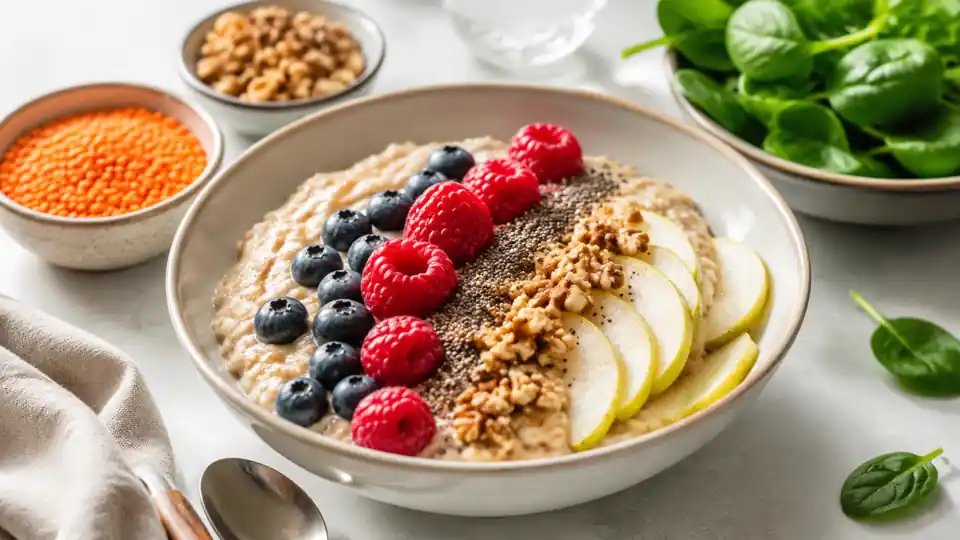
What fiber does for your body
Dietary fiber is the part of plant foods that your body does not fully digest. It is found in beans, lentils, whole grains, vegetables, fruit, nuts, and seeds. Different fibers behave differently in the gut, which is one reason variety matters more than relying on one “superfood.”
Fiber helps add bulk to stool and can support regular digestion. It can also make meals feel more satisfying, which may help with appetite awareness. MedlinePlus notes that both soluble and insoluble fiber have useful roles, and that many people do not get enough fiber from everyday foods.
Plant foods and adequate fluids work together to support comfortable digestion.
Fiber-rich foods can make meals feel more substantial and satisfying.
A wider mix of beans, grains, fruit, vegetables, nuts, and seeds adds more than fiber alone.
Why fiber can cause bloating at first
When your usual intake is low, a sudden jump in fiber gives your gut more material to process and ferment. That can mean gas, cramping, or a “too full” feeling. This is common, but it is not a sign that fiber is bad for you.
Three habits make the transition easier:
- Increase slowly. Add one change, then give it several days before adding another.
- Drink regularly. Fluids help fiber move through the digestive system.
- Spread it across meals. A little at breakfast, lunch, and dinner is often more comfortable than one very high-fiber meal.
The goal is not to reach a number overnight. The goal is to make fiber feel normal in your everyday meals.
A simple 7-day plan to eat more fiber comfortably
This plan is deliberately gentle. Choose the options you like and adapt portions to your appetite, culture, budget, and dietary needs.
| Days | One small change | Comfort tip |
|---|---|---|
| 1–2 | Add berries or a pear to breakfast. | Keep the rest of your meals familiar. |
| 3–4 | Choose oats or whole-grain toast once a day. | Add a glass of water with that meal. |
| 5 | Add a small serving of beans or lentils to lunch or dinner. | Canned options are fine; rinse them first. |
| 6 | Snack on a handful of nuts or seeds with fruit. | Start with a modest portion if you are new to them. |
| 7 | Repeat the two changes that felt best. | Consistency matters more than adding something new. |
Easy high-fiber food swaps
Rather than rebuilding every meal, look for one easy exchange. These options are practical starting points:
- Choose oatmeal with fruit instead of a low-fiber sweet cereal.
- Add chickpeas, black beans, or lentils to soup, salad, curry, or rice dishes.
- Keep the skin on apples and pears when it is safe and enjoyable to do so.
- Swap one refined-grain serving for a whole-grain option such as brown rice, whole-wheat pasta, or whole-grain bread.
- Add vegetables to meals you already make—frozen vegetables count, too.
- Sprinkle chia or ground flax on yogurt or oats, starting with a small amount.
Pairing a gradual fiber routine with consistent movement can make healthy habits feel more manageable. Our guide to a 10-minute walk after meals offers another simple place to start.
How much fiber do adults need?
Needs vary with age, sex, energy intake, and health conditions. General adult recommendations are often expressed as a daily range, but you do not need to count every gram to make progress. A useful first step is to make plant foods a routine part of each meal. If you have a digestive condition or have been advised to limit fiber, follow your clinician’s or registered dietitian’s guidance instead.
Frequently asked questions
What is the easiest way to start eating more fiber?
Add one familiar food—such as fruit at breakfast, vegetables at dinner, or beans at lunch—and repeat it for several days before adding another change.
Can fiber make constipation worse?
Adding fiber rapidly without enough fluid can be uncomfortable for some people. Increase slowly, drink regularly, and seek individualized advice if constipation persists or is severe.
Are fiber supplements the same as fiber from food?
Supplements can be useful in some situations, but whole foods provide fiber alongside vitamins, minerals, and other plant compounds. Ask a clinician or dietitian which approach fits your needs.
Who should be cautious about increasing fiber?
People with certain digestive conditions, a bowel narrowing, recent gastrointestinal surgery, or a prescribed low-fiber diet should get personalized guidance before making major changes.
Sources and further reading
This article is for general education and is not medical advice. Talk with a qualified healthcare professional for advice tailored to your health history, symptoms, and medications.

