
A 10-minute walk after a meal is one of the simplest ways to add movement to a busy day. You do not need a gym, special equipment, or a perfect schedule. A comfortable stroll soon after eating may help reduce the usual rise in blood sugar after a meal, break up sitting time, and turn an ordinary routine into a healthy habit.
The quick answer
For most people, a gentle-to-brisk walk for about 10 minutes soon after eating is a practical place to start. Research suggests post-meal activity can lower the immediate blood-glucose response compared with staying seated. It is a helpful habit—not a cure or replacement for prescribed care.
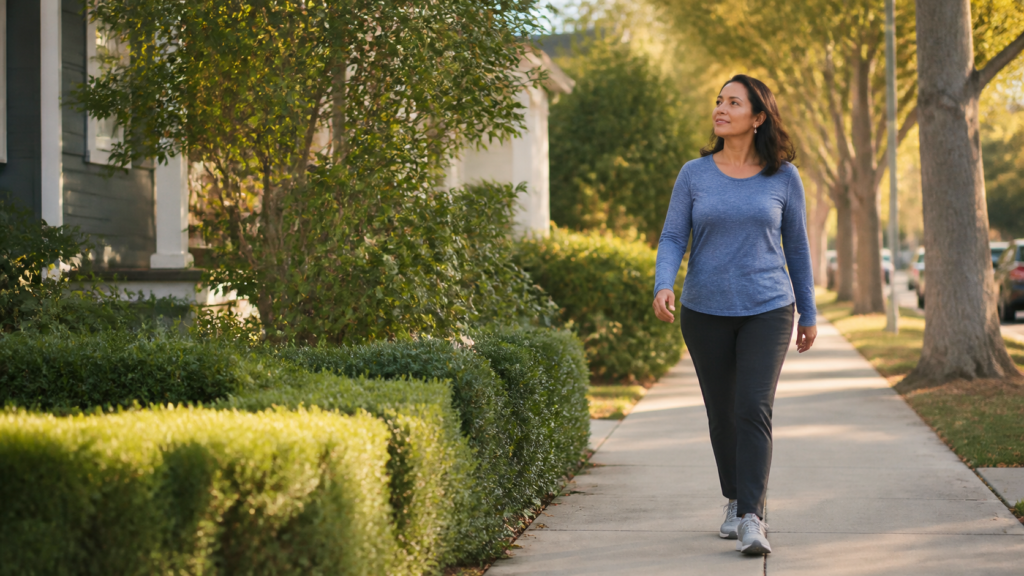
Why a short walk after meals can help
After you eat, your body digests food and blood glucose commonly rises. Your muscles use glucose for energy when they move, which is one reason a little activity after a meal can be useful. A 2022 systematic review and meta-analysis found that exercise performed after eating was feasible for reducing post-meal glucose excursions, with earlier post-meal activity generally performing better than waiting longer.
That does not mean every walk produces the same result. Meal size, the pace you choose, sleep, medications, and your own health all matter. Still, the habit has a big advantage: it is easy to repeat. The CDC notes that adults benefit from doing more physical activity and sitting less, and brisk walking counts as moderate-intensity activity for many people.
A walk creates a natural pause between a meal and the next screen, task, or commute.
Ten minutes is approachable, especially when a longer workout feels out of reach.
Attaching a walk to a regular meal removes the need to decide when to exercise.
When should you walk after eating?
Think soon, not perfect. If you feel comfortable, start within roughly 15 to 30 minutes after finishing a meal. The goal is not to race out the door; it is to replace a little post-meal sitting with easy movement. If a large meal leaves you uncomfortable, wait a bit longer or begin with a slower five-minute stroll.
What pace works best?
A conversational pace is a smart default: you should be able to speak in full sentences, even if you notice your breathing a little more. For some people that will be a relaxed walk; for others it may be a purposeful brisk pace. Avoid turning it into an intense workout immediately after a heavy meal if that feels unpleasant.
Consistency beats intensity. A comfortable 10-minute walk you repeat most days is more useful than a demanding plan you abandon after a week.
A simple 7-day post-meal walking plan
Pick the meal that is easiest to protect—often dinner, lunch, or the meal after your longest stretch of sitting. Keep shoes near the door and set a reminder for the first week.
| Days | Your walk | Make it easier |
|---|---|---|
| 1–2 | 5 minutes after one meal | Walk around the block or inside your home. |
| 3–4 | 8–10 minutes after one meal | Invite a family member or take a phone call while walking. |
| 5–7 | 10 minutes after one or two meals | Notice which timing feels most realistic for your routine. |
Small adjustments that keep the habit alive
- Bad weather? Walk laps indoors, use stairs carefully, or march gently while putting away dishes.
- Too busy after lunch? Try five minutes now and five minutes later rather than skipping it altogether.
- Working from home? Make a “kitchen-to-front-door” route your default transition after eating.
- Already walk 30 minutes? Your post-meal stroll can be part of that total. See our guide on walking 30 minutes a day for more ways to build a sustainable routine.
When to check with a clinician first
Walking is generally accessible, but personalized advice matters. Speak with your clinician before starting or changing an activity plan if you have chest pain, severe shortness of breath, dizziness, an injury that affects walking, or a condition that limits exercise. If you use insulin or medicines that can lower blood glucose, ask your diabetes care team how activity may affect your plan and whether you should monitor glucose.
Stop and seek medical help for warning signs such as chest pressure, fainting, or severe shortness of breath. This article is general education and is not personal medical advice.
How to make this habit stick
The most effective routine is the one that fits real life. Start with one meal, one route, and one tiny commitment: put on your shoes and move for five minutes. Once that feels normal, extend it to 10 minutes or add another meal. You are building a cue—I finish eating, then I move—not chasing a flawless streak.
Frequently asked questions
Is a 10-minute walk after meals enough to matter?
It can be a meaningful way to add movement and reduce sitting. Research on post-meal activity is promising for the immediate blood-glucose response, while regular physical activity brings broader health benefits over time. Think of it as one useful part of an overall routine.
Should I walk after every meal?
You do not have to. Begin with the meal that fits your schedule. If you enjoy it and it feels good, you can gradually add walks after other meals.
Can I walk after dinner?
Yes. A comfortable post-dinner walk can be especially practical for people who sit through the evening. Keep the pace pleasant and choose a well-lit, safe route.
Is this a treatment for diabetes?
No. Activity can support glucose management, but it does not replace medication, nutrition guidance, glucose monitoring, or individualized advice from your diabetes care team.
