
10-Minute Walk After Meals: Benefits, Timing, and a Simple Plan

A 10-minute walk after a meal is one of the simplest ways to add movement to a busy day. You do not need a gym, special equipment, or a perfect schedule. A comfortable stroll soon after eating may help reduce the usual rise in blood sugar after a meal, break up sitting time, and turn an ordinary routine into a healthy habit.

The quick answer

For most people, a gentle-to-brisk walk for about 10 minutes soon after eating is a practical place to start. Research suggests post-meal activity can lower the immediate blood-glucose response compared with staying seated. It is a helpful habit—not a cure or replacement for prescribed care.
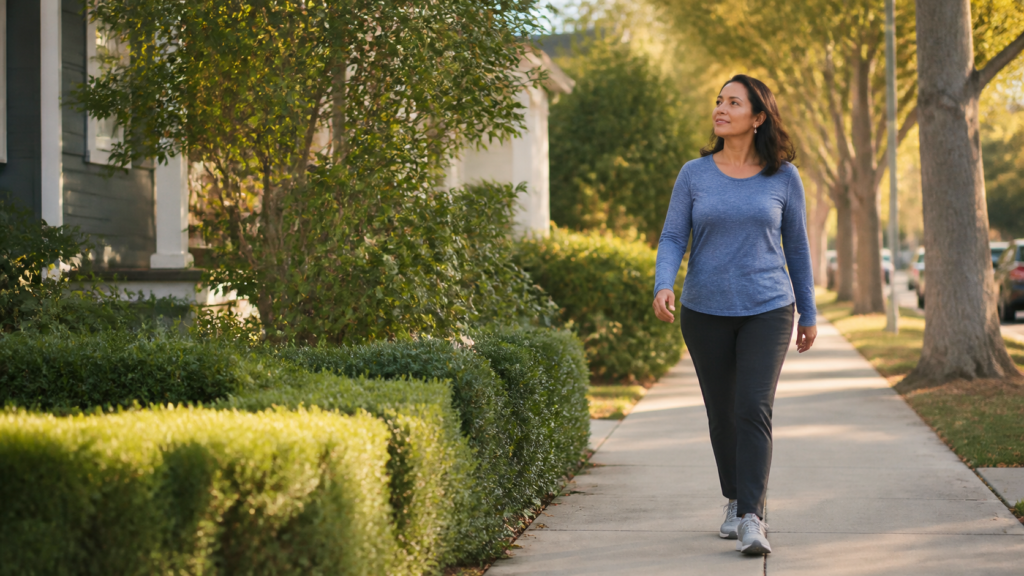
Woman taking a gentle 10-minute walk on a tree-lined neighborhood sidewalk after a meal

Why a short walk after meals can help

After you eat, your body digests food and blood glucose commonly rises. Your muscles use glucose for energy when they move, which is one reason a little activity after a meal can be useful. A 2022 systematic review and meta-analysis found that exercise performed after eating was feasible for reducing post-meal glucose excursions, with earlier post-meal activity generally performing better than waiting longer.

That does not mean every walk produces the same result. Meal size, the pace you choose, sleep, medications, and your own health all matter. Still, the habit has a big advantage: it is easy to repeat. The CDC notes that adults benefit from doing more physical activity and sitting less, and brisk walking counts as moderate-intensity activity for many people.

Breaks up sitting
A walk creates a natural pause between a meal and the next screen, task, or commute.
Builds daily movement
Ten minutes is approachable, especially when a longer workout feels out of reach.
Supports consistency
Attaching a walk to a regular meal removes the need to decide when to exercise.

When should you walk after eating?

Think soon, not perfect. If you feel comfortable, start within roughly 15 to 30 minutes after finishing a meal. The goal is not to race out the door; it is to replace a little post-meal sitting with easy movement. If a large meal leaves you uncomfortable, wait a bit longer or begin with a slower five-minute stroll.

What pace works best?

A conversational pace is a smart default: you should be able to speak in full sentences, even if you notice your breathing a little more. For some people that will be a relaxed walk; for others it may be a purposeful brisk pace. Avoid turning it into an intense workout immediately after a heavy meal if that feels unpleasant.

Consistency beats intensity. A comfortable 10-minute walk you repeat most days is more useful than a demanding plan you abandon after a week.

A simple 7-day post-meal walking plan

Pick the meal that is easiest to protect—often dinner, lunch, or the meal after your longest stretch of sitting. Keep shoes near the door and set a reminder for the first week.

DaysYour walkMake it easier
1–25 minutes after one mealWalk around the block or inside your home.
3–48–10 minutes after one mealInvite a family member or take a phone call while walking.
5–710 minutes after one or two mealsNotice which timing feels most realistic for your routine.

Small adjustments that keep the habit alive

  • Bad weather? Walk laps indoors, use stairs carefully, or march gently while putting away dishes.
  • Too busy after lunch? Try five minutes now and five minutes later rather than skipping it altogether.
  • Working from home? Make a “kitchen-to-front-door” route your default transition after eating.
  • Already walk 30 minutes? Your post-meal stroll can be part of that total. See our guide on walking 30 minutes a day for more ways to build a sustainable routine.

When to check with a clinician first

Walking is generally accessible, but personalized advice matters. Speak with your clinician before starting or changing an activity plan if you have chest pain, severe shortness of breath, dizziness, an injury that affects walking, or a condition that limits exercise. If you use insulin or medicines that can lower blood glucose, ask your diabetes care team how activity may affect your plan and whether you should monitor glucose.

Stop and seek medical help for warning signs such as chest pressure, fainting, or severe shortness of breath. This article is general education and is not personal medical advice.

How to make this habit stick

The most effective routine is the one that fits real life. Start with one meal, one route, and one tiny commitment: put on your shoes and move for five minutes. Once that feels normal, extend it to 10 minutes or add another meal. You are building a cue—I finish eating, then I move—not chasing a flawless streak.

Frequently asked questions

Is a 10-minute walk after meals enough to matter?

It can be a meaningful way to add movement and reduce sitting. Research on post-meal activity is promising for the immediate blood-glucose response, while regular physical activity brings broader health benefits over time. Think of it as one useful part of an overall routine.

Should I walk after every meal?

You do not have to. Begin with the meal that fits your schedule. If you enjoy it and it feels good, you can gradually add walks after other meals.

Can I walk after dinner?

Yes. A comfortable post-dinner walk can be especially practical for people who sit through the evening. Keep the pace pleasant and choose a well-lit, safe route.

Is this a treatment for diabetes?

No. Activity can support glucose management, but it does not replace medication, nutrition guidance, glucose monitoring, or individualized advice from your diabetes care team.

Can Walking 30 Minutes a Day Help You Lose Weight? Benefits & Plan

Walking 30 Minutes

Walking for 30 minutes a day can be a practical way to support your health, improve fitness, and help with weight management. It is not a shortcut or a guarantee of weight loss, but it is a low-impact habit that can add up when paired with an overall eating pattern and routine you can maintain.

The quick answer

For many adults, a brisk 30-minute walk counts as moderate-intensity activity. Done regularly, it can help you move toward the widely recommended goal of at least 150 minutes of moderate activity per week. The biggest benefit comes from making the routine sustainable—not from pushing through discomfort.

Four adults walking together on a sunny park path as part of a 30-minute daily walking routine
A daily walk can be social, simple, and easy to adapt to your fitness level.

What a daily 30-minute walk can do

Walking is an accessible form of aerobic activity that requires little equipment. Regular physical activity supports heart health, sleep, mood, bone health, balance, and the ability to manage daily tasks. For people who spend much of the day sitting, a walk is also a useful way to break up inactive time.

Thirty minutes is a helpful benchmark because it is long enough to feel purposeful but short enough to fit around work, family, or errands. You can walk outdoors, on a treadmill, in a mall, or in shorter blocks across the day.

Heart and stamina
A regular walking habit builds aerobic capacity and can make everyday movement feel easier.
Mood and sleep
Movement can help reduce short-term feelings of anxiety and support better sleep quality.
A routine you can repeat
Walking is flexible: it can happen outdoors, indoors, alone, or with company.

Can walking 30 minutes a day help you lose weight?

It can contribute, especially when it helps you build a consistent calorie-burning routine and supports a healthier overall lifestyle. But weight changes depend on many factors, including food intake, sleep, stress, health conditions, medicines, body size, and the intensity and frequency of activity. A walk should not be presented as a promise of a particular result on the scale.

A more useful goal is to notice what walking adds to your day: more energy, a clearer break from sitting, improved fitness, or a better connection to a balanced eating routine. If weight loss is a goal, gradual, steady changes are usually more sustainable than extreme plans. Our article on eating more fiber without bloating can help you build satisfying meals alongside your movement habit.

A good walking plan is one you can still do on an ordinary week—not just during a burst of motivation.

How fast should you walk?

For a moderate-intensity walk, aim for a purposeful pace that raises your breathing but still lets you speak in short sentences. You do not need to race. If you are new to exercise, recovering from a break, or managing joint discomfort, start at a comfortable pace and build gradually.

Make the same 30 minutes more engaging

  • Choose a route with gentle hills if they feel comfortable.
  • Walk with a friend or listen to a favorite podcast.
  • Use intervals: one minute slightly faster, then two minutes easy.
  • Walk after a meal if that timing is easiest for you. A 10-minute walk after meals is another simple way to spread movement through the day.

A simple weekly walking plan

If 30 continuous minutes feels like a big jump, start where you are. Three 10-minute walks provide the same total time as one 30-minute session, and they can be easier to fit into a busy day.

Starting pointWeek-one goalNext step
New to walking10–15 minutes, 4–5 daysAdd 5 minutes every week or two as comfortable.
Already somewhat active20–30 minutes, 5 daysAdd a few brisk intervals or a slightly longer weekend walk.
Busy scheduleThree 10-minute walksAnchor one walk to a regular daily cue, such as lunch or dinner.

How to stay consistent

  • Put walking shoes where you can see them.
  • Choose a route that starts at your front door.
  • Track completed walks, not calories burned.
  • Have an indoor backup for bad weather.
  • Keep the walk easy on low-energy days rather than skipping the habit entirely.

When to slow down or seek advice

Walking is generally safe for many people, but it should feel manageable. Slow down or stop if you experience chest pain, severe shortness of breath, fainting, or sudden dizziness, and seek urgent medical care when appropriate. Check with a clinician before starting a new program if you have heart disease, a significant chronic condition, a recent injury, or symptoms that limit activity.

Frequently asked questions

Is walking 30 minutes a day enough exercise?

For many people, walking 30 minutes on five days each week adds up to 150 minutes of moderate activity. Strength and balance activities are also useful parts of a well-rounded routine.

Do I need to walk all 30 minutes at once?

No. Shorter walks can be accumulated throughout the day. Three 10-minute walks are a practical alternative when one longer walk does not fit your schedule.

Will walking alone reduce belly fat?

Walking can support overall activity and energy balance, but no exercise can target fat loss from one body area. Changes in body composition happen across the body and vary between individuals.

What shoes should I wear for walking?

Choose comfortable, supportive shoes that fit well and are appropriate for your surface. Replace them when the cushioning or tread is worn down.

This article is for general education and is not medical advice. A qualified healthcare professional can help you choose activity that fits your personal health needs.